

Comedian Steven Wright once joked, “Last night I stayed up late playing poker with tarot cards. I got a full house and four people died.”
Page Contents
The tarot has a reputation as a mystical tool for communicating with otherworldly planes and for predicting (or even creating) the future, but in our increasingly scientific world, many have raised questions about whether the tarot is a legitimate way of learning about ourselves and our fate.
In this article written along with expert tarot readers from TarotAtlas.com, we’ll take a look at the world of tarot and how justified you are in relying on the tarot to explore your past, present, and future.
The History of the Tarot
Many people believe that the tarot has ancient origins as a mystical catechism for a variety of occult religious groups. However, these claims are largely the work of eighteenth-century French mystics.
In reality, the tarot deck emerged in the late Middle Ages as a set of playing cards for a variety of games, such as the Italian card game Tarocchini.
Like the standard playing card deck, the tarot derives ultimately from the Egyptian Mamluk deck from the fourteenth century.
Early European playing cards, including the tarot deck, originally began with four suits: batons, coins, cups, and swords.
The tarot deck diverged from other playing cards when 21 trumps and the Fool joined the four suits.
These trumps eventually became some of tarot’s most famous cards. By 1450, the tarot deck as we know it today had begun to take shape.
The transition from playing cards to objects of divination began centuries later, in the late 1700s. In England, where card games using a tarot deck were not common, people who encountered the deck found other uses for it, including divination.
Two French occultists, Antoine Court and Jean-Baptiste Alliette, developed the modern concept of the tarot deck as a tool for cartomancy. They also developed an elaborate backstory for the tarot as the lost pages of the Book of Thoth from ancient Egypt.
The Tarot as a Tool
The question, however, is whether using tarot cards for cartomancy is a legitimate practice. This falls under the question of what we mean by “legitimate.”
Any number of practices can be used for magical, occult, or paranormal purposes, and in most cases the only difference between using, say, a tarot deck versus a standard playing card deck is history and tradition.
Tarot, however, has been the subject of many famous cases in which its predictive power was stunning. A particularly chilling case involved a Greek scholar named Cuffe, the secretary to the Earl of Essex in the time of Elizabeth I.
An astrologer told Cuffe he would suffer an untimely death and said that the cards could provide details.
Cuffe did not believe him but agreed to listen to the message of the cards. Using an Italian tarot deck, the astrologer asked Cuffe to draw three cards.
He drew one called the Traitor, which in Italian tarot was used in place of the Devil. Next, he drew Justice and finally the Hanged Man.
The astrologer told him what the cards meant, and Cuffe laughed at the prophecy. But, twenty years later, Cuffe was arrested for treason, found guilty in court, and executed by hanging on March 13, 1602.
Startling stories such as this have suggested to many practitioners that the tarot can serve as a mystical tool for foretelling the future.
To that end, we often find that psychics include tarot in their readings for paying clients.
While these types of psychic readings are legally “for entertainment purposes only,” it’s clear that many of the people who seek out these services do so because they believe in the mystical power of the tarot to foretell the future.
Another View of Tarot
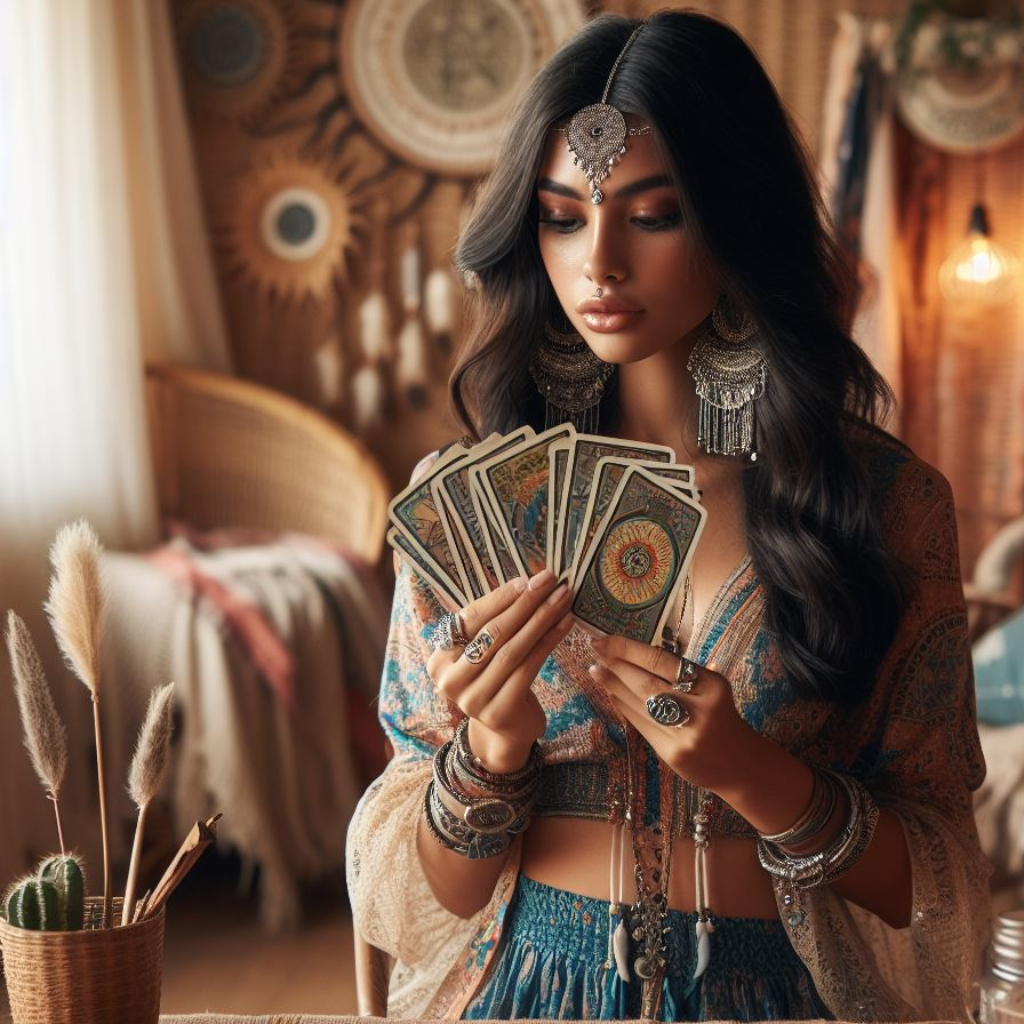
However, many modern practitioners of tarot have a more subtle view of the power of the cards. In their view, the tarot is not in and of itself a mystical device but is rather a tool that allows us to unlock insights and intuition that is already present within us. Tarot can even function to bring people together as a community.
Tarot reader Fiona Lensvelt explained in the Guardian that “There’s a real sense of community in using it, particularly among younger women. People think it’s about predicting the future, but it isn’t. It’s about the present, and it can be very empowering . . . tarot allows you to consider a problem, give a voice to it, work it through and see where the blocks might be. It can give voice to problems or fears.”
In this view, tarot serves as a way to focus your own thoughts and ideas to help you work through a particular problem or issue by prompting you to think about it in a new way. For example, when you ask the tarot about a specific issue and draw a card, it doesn’t really matter what card you pull as much as it does how the card inspires you to think about the issue in a way you may not have considered before.
If, for example, you draw the King of Swords, a card that represents authority and respect, you may be prompted to think about your own feelings about authority figures and the respect you give and receive. Those answers have always been inside of you, but when the card prompts you to call them to the surface, you may gain new insights you would not otherwise have thought about.
In this view, it’s less important whether the tarot has paranormal powers than whether it is able to prompt psychological insights that help those seeking advice from it to draw their own conclusions. To that extent, you get out of it what you put into it.
Wrapping Up
Ultimately, tarot is as legitimate a tool for seeking guidance as any other source of advice and insight, so long as you understand the strengths and limitations of tarot. When you seek answers, keep in mind that you will find them within yourself, and the tarot is a tool to help you discover what lies within.

Celina brings a wealth of experience to Hiddennumerology as our new Chief Editor.
With a bachelor’s degree in communication and journalism, she has built an impressive career editing for renowned publications focused on self-care and relationships.
Known for her empathetic approach, Celina’s edits will transform our content, infusing it with depth and emotional resonance. Her thoughtful revisions and additions aim to touch readers’ hearts, making each article not just informative, but deeply relatable.


