The end of a relationship? There is always someone better for you. Lost your job? A new (and again, better) opportunity is just around the corner.
Page Contents
All you need is a pinch of patience and anticipation because “good things come to those who wait,” right? Sure.
If you’re building a healthy habit or recovering from burnout, time is your friend.
But we’re not talking about that here. We’re talking about pure anticipation, where you mentally live in the future and completely ignore your present.
Why do we do it? And how can we stop? Let’s find out.
But first: why can’t we live in the moment?
It’s in our nature to worry about what the future holds. Think of it as a survival habit inherited from our ancestors. How could they survive if they didn’t worry about predator threats or harsh weather?
But when you’re constantly scanning for danger or planning the next 5 moves ahead, your brain stays locked in the future.
If you’ve been going through adult adhd treatment, you probably know how hard it is to quiet that internal noise and simply be here, now. Anyway, here are the top reasons why living in the future feels safe for your brain.
- The world itself isn’t a safe place. YouTube yells about recession and financial collapse; your grocery bill keeps growing, and the housing crisis isn’t getting better. Pretty devastating, right?
- Social media creates the comparison game. When social media shows you everyone else “winning,” your current moment might feel small or wrong. In the end, you get unhappy with the current state of things in your life and daydream about the better version of yourself somewhere in the future.
- You live in a culture that admires success and productivity. At least, that’s what the western culture is all about. No one celebrates you for simply being in the moment, because the system always teaches you that there’s more to strive for. No wonder so many people fall victim to burnout, mental exhaustion, and anxiety loops they can’t escape from.
Here is what to do 🧐.
#1: Look for peace instead of happiness
From the perspective of mass culture (think The Pursuit of Happyness, Julie & Julia, or Eat, Pray, Love), happiness is something illusional and distant — something you find later. But as noted in the liven app review, peace is something you can find in the moment.
Because in the pursuit of happiness, your goal becomes avoiding unhappiness. That leads to black-and-white thinking: happiness is good, unhappiness is bad.
But peace is different. It’s when you avoid nothing and can accept anything that happens to you, even the not-so-great parts. 🏞️
#2: Avoid overstimulation
In a world that values productivity (often at the expense of your mental and physical health — say hi to burnout), over-scheduling and overstimulation fuel things. You wake up and immediately check your phone. You multitask all day. You fall asleep to background noise.
Here’s how to break the cycle:
- Eat slowly. Not in front of a screen. Pay attention to taste, texture, and your body’s hunger cues. This grounds you in now.
- Curate your routine. Fill your after-work hours with things you actually love to avoid mindless scrolling. This can be anything from a sports activity to your favorite hobby.
- Walk slowly, preferably in nature. On your way home, go through a park instead of the main road. Notice the tree shapes, the way the wind sounds, and the feeling of your feet touching the ground.
- Turn chores into sensory meditation. Washing dishes. Folding laundry. Sweeping the floor. These are all rhythmic, physical tasks that can feel like moving meditations.
#3: Introduce the ‘Now and here’ practices
Those are simple at first glance and supereffective in the long term.
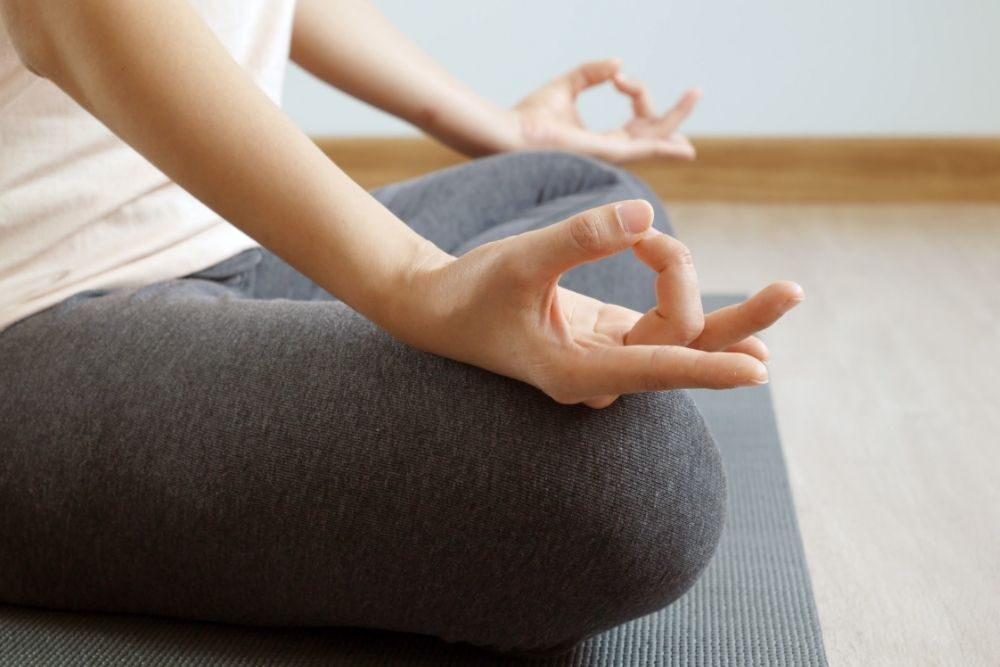
- Meditate. From a scientific perspective, meditating only 10 minutes daily calms your nervous system, reduces stress hormones, and helps with concentration. Also, it helps you stay grounded and better manage your response in anxiety-inducing situations.
- Take a yoga class. Yes, it’s the mind-and-body connection that counts. The trick is that your body is always in the present even if your mind isn’t. Not only does yoga have long-term physical benefits like improved flexibility and balance, but also helps with stress reduction.
- Journal. Write about your current day. Not your 5-year plan. Try prompts like “What do I feel in this moment?” or “What part of my day brought calm?”
#4: Find creative hobbies that require your full attention

When you create something with your hands or focus deeply on art, you snap out of future-mode. Try:
- Drawing, doodling, coloring
- Listening to vinyl records or full albums (no shuffle!)
- Knitting, crocheting, or embroidery — slow, repetitive motion calms the nervous system
- Cooking unfamiliar dishes from scratch
- Puzzles or building things by hand
- Playing a musical instrument, and others
You don’t have to be good at this hobby — you just have to be present 🎨.
#5: Work on your anxiety
Not everyone anticipates good things. If you’ve been dealing with anxiety, you know too well that suffocating feeling of doom.
Yep, anticipatory anxiety is real. Regardless of where you are or what you’re doing, you expect only bad things to happen to you and become avoidant because that’s what your mind has developed as a defensive mechanism.
Perhaps, you had helicopter parents who taught you that trying new things is dangerous. Perhaps, you’re dealing with social phobia because you were constantly criticized as a child and now expect everyone to talk negatively to you.
Whatever it is, here is how to deal with anxiety:
- Therapy. A good mental health specialist can help you trace your belief system back to childhood experiences, understand what’s behind those beliefs, and learn how to recognize and manage your triggers.
- Somatic work. Learn how anxiety lives in your body and how to release it with 5-4-3-2-1 techniques, body scans, or any other method that helps.
- Lifestyle tweaks. Regular sleep, blood sugar balance, and movement lower cortisol levels, hence, reduce anxiety.
Final thoughts
Now that you’re aware of your time-traveling tendencies, you have a choice.
Your time is not a thing to race against. It’s a rich resource that, unlike your bank account, you can’t replenish. Slow down your pace. This moment isn’t a waiting room. It’s your life.
You’ve got it! 🧭🌱

Celina brings a wealth of experience to Hiddennumerology as our new Chief Editor.
With a bachelor’s degree in communication and journalism, she has built an impressive career editing for renowned publications focused on self-care and relationships.
Known for her empathetic approach, Celina’s edits will transform our content, infusing it with depth and emotional resonance. Her thoughtful revisions and additions aim to touch readers’ hearts, making each article not just informative, but deeply relatable.